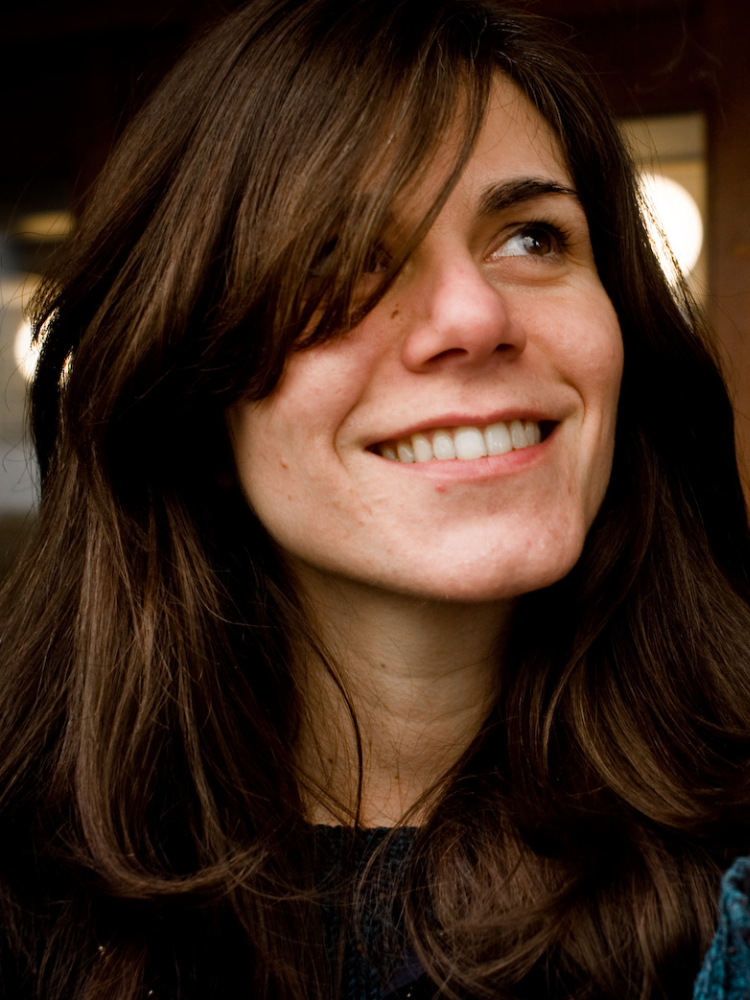
ERIKA ROSSI (Italy)
"Up close, no one is normal"... Born in Trieste in 1974, she graduated in Media Studies and than moved to Milan where she specialized in Audiovisual Languages at Università Cattolica, where she got also an MA in screenwriting. After a long experience as author in the italian national television RaiTre, since 2008 she devoted herself to cinema del reale, with particular interest in the topic of mental health and care. She has been selected for Eurodoc workshop and for Archidoc workshop, held in La Femis School of Cinema in Paris. She was finalist in 2014 for the screenwriting contest Premio Solinas, Documentary Award for documenatry Cinema, and in 2017 her project The caring city she won the Premio Solinas Development Grant Her documentaries have been selected in many international film festivals, including the Torino Film Festival, Vision du Reél, Document Glasgow, Bafici and screeened on Rtv-Slo, Hrt and Al Jazeera Balkans. In 2018 she is selected as director for the Berlinale Talent Campus and in 2019 she founded Ghirigori, a company focused in creative documentary. She has written and directed Trieste on Basaglia (Italy 2012) winner at Trieste Film Festival, Marco Cavallo’s trip (Italy 2014) presented at the Torino Film Festival 2014, winner of the Franco Rossano Prize as best social documentary and screened in the Italian Senate. Every soul of my body (Italy-Slovenia 2017) in competition at Visions du Rèel and in many other interantional film festival around the world; winner of the SNCCI Critics Award and Best Editing at the Golden Tree IFF in Frankfurt screened in Al Jazeera Blakans TV, RVT SLO and HRT. The Caring City, presented at TriesteFilmfestival was screened in more than 60 italian theathers. In 2021 she wrote - together with Peppe Dell'Acqua and Massimo Cirri- and directed, the show "Tra parentesi, the true story of an unthinkable liberation” which has been presented in teathres throughout Italy. Since 2021 she is selected as expert trainers of the project "Visual Education Operators at School" of the National Cinema Plan of MIM and MIC. Noi siamo gli errori che permettono la vostra intelligenza presented in 2025 at PerSo FF won the Public Award and the Best feature prize ai FF del Garda.
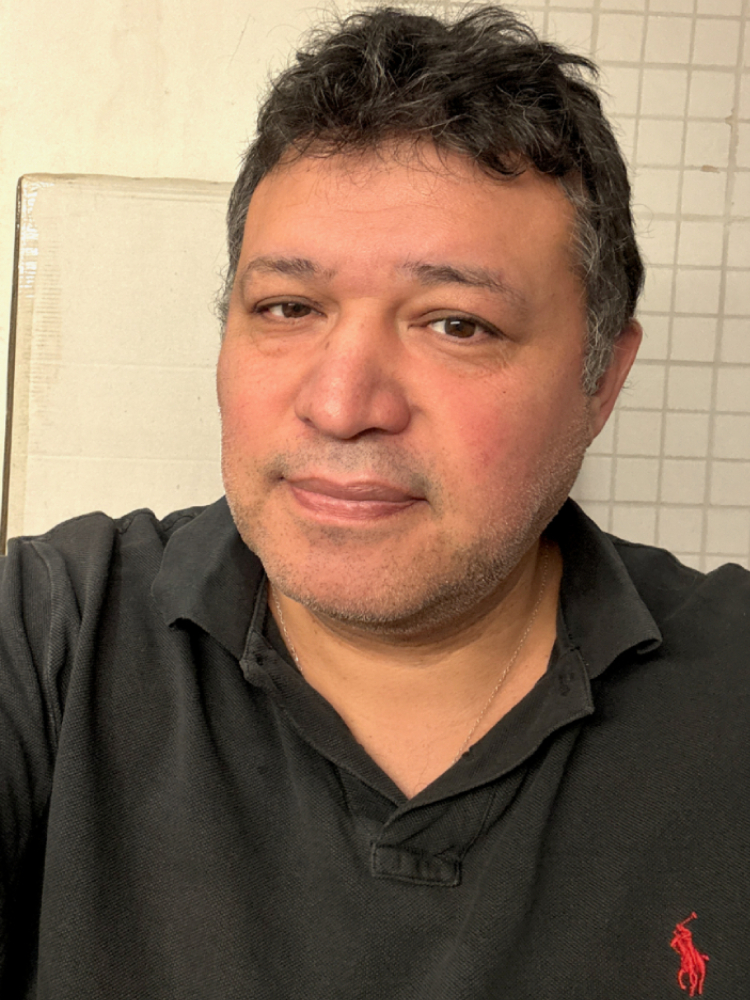
RONNIE RAMIREZ (Chile)
"Either we invent, or we fail" (Simón Rodríguez). Ronnie Ramirez was born in 1971 in Chile, graduated in"image"in 1996 at INSAS, school of cinema located in Brussels. Today, he combines directing, filming operator and cinema pedagogy. The characters in his films are all confronted with changes in society, therefore disrupted lives... The work of Ronnie Ramirez is characterized by a humanist approach, of proximity and of social engagement. His films have received numerous awards and recognition at multiple international festivals. Member of the Selection Committee of films of the French Community of Belgium since 2011, member of the Belgian committee of SCAM and founder in 2009 of ZIN TV, an associative WebTV based in Brussels for which he works numerous reports and animates workshops of popular education. He teaches cinema in professional schools in Brussels, as well as in cinema schools in Bolivia, Cuba, Chile and Venezuela. Since 2021, he has been working with the Kinolatino Festival, while continuing his commitment to film education and developing his own film projects.
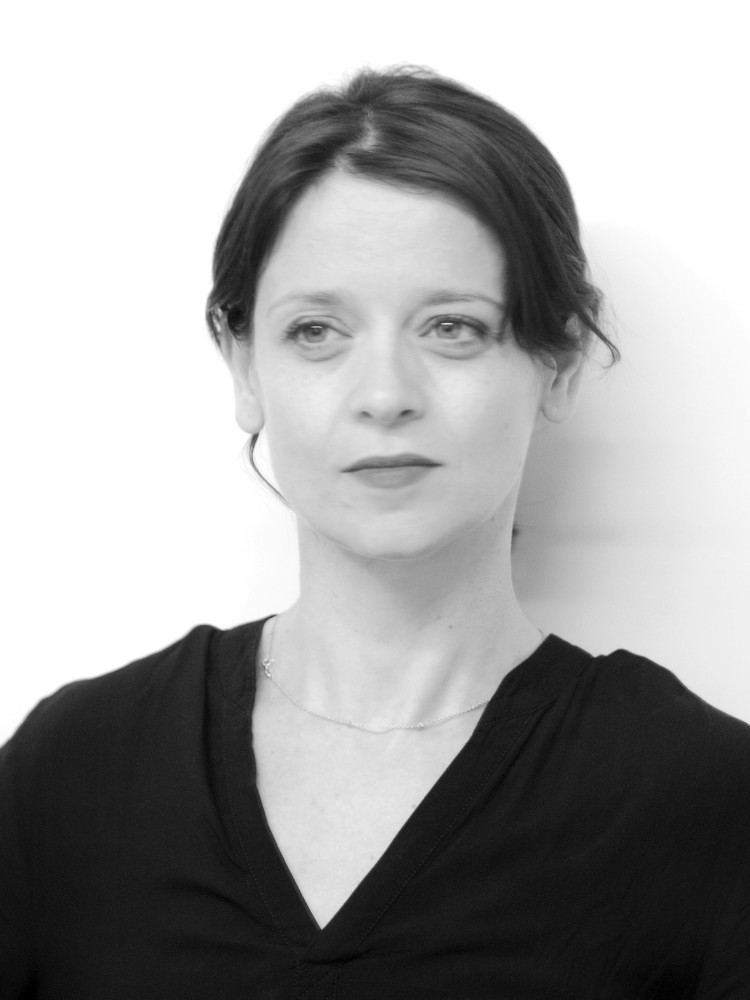
GINA ANNUNZIATA (Italy)
"Cinema is an art of the present. It’s not about yesterday or tomorrow—it’s about today!" Sarah Maldoror. Gina Annunziata (PhD in Visual Studies) is Professor of Film History at the Accademia di Belle Arti di Napoli, where she coordinates the School of Cinema, Photography and Audiovisual Arts. A scholar and critic, she has been working as a film curator since 2007, collaborating with foreign cultural institutes, national and international festivals. Her research and critical writing span a wide range of topics, including Italian silent cinema, the representation of Arab-Muslim otherness, Mediterranean and African cinema, feminist cinema, with attention to questions of genre, authorship, spectatorship, and the political dimensions of filmmaking. She has contributed essays and scientific papers to festival catalogs, academic journals, and cultural publications. As a curator, she has designed retrospectives and film series dedicated to, among others, Tunisian cinema, Third Cinema, and the work of Jean-Luc Godard, Béla Tarr, Mohsen Makhmalbaf, Chantal Akerman, and Krzysztof Kieślowski. She is the co-founder with Gianluca Riccio of Osservatorio Artinmove, a research, training, and artistic production center at the Accademia di Belle Arti di Napoli devoted to expanded cinema. Since 2021, she has served as an expert trainer for the Piano Nazionale Cinema per la Scuola, a national program promoted by the Italian Ministries of Culture (MIBACT) and Education (MIUR). Since 2011, she has been a full member of the Consulta Universitaria del Cinema (CUC).

ALEXANDRE LEVARAY (France)
"If i live too long, i'm afraid i'll die", extract from the song "Strangers" by The Kinks. Alexandre Levaray was born in northern France in 1991. A film enthusiast since childhood, he took his first steps with an internship at the cinema in his small hometown. He then decided to pursue film studies, earning a master's degree in theories and artistic practices. Around the same time, he became a regular attendee of the Amiens International Film Festival (FIFAM), a showcase dedicated to independent and marginal cinema. He joined the festival as a collaborator in 2016, initially as a press officer, learning on the job the many small cogs that keep a festival running. He later became a programmer alongside Marie-France Aubert, honing a keen eye for all forms of visual media and emerging filmmakers. His approach rejects elitism and aims to build bridges between the arts and between audiences. In 2025, he was appointed artistic director of the festival. In 2021, he published Le Cinéma, un pays sur la carte du monde (Cinema, a Country on the World Map), a book that weaves together the history of the Amiens Festival with French cultural policies and the birth, in the 1980s, of film festivals specialized in Asian, African, and South American cinema. Since 2023, he has been co-managing Le Drame, a nonprofit, community-based cinema with an alternative and activist vocation, dedicated to local filmmakers and experimentation. In his free time, he performs as a DJ under the pseudonym DJ La Belle Affaire.

ROCH TRAN (Belgium)
"Impose ta chance, serre ton bonheur et va vers ton risque. A te regarder, ils s'habitueront" - (Press your luck, hold tight to your happiness and move towards your risk. Watching you, they will get used to it), René Char. Roch works at the Centre du Cinéma et de l'Audiovisuel of the Fédération Wallonie-Bruxelles, where he coordinates the secretariat of the documentary support commissions. In practice, he verifies the eligibility of applications, synthesises deliberations into official opinions and patiently answers the questions — and sometimes the disappointments — of producers, an exercise that in this field requires a certain level of mastery. For several years he has been accompanying the emergence of Belgian French-language documentary, from the most intimate films to the most political ones, ensuring that each project is assessed with rigour, fairness and humanity. Nathalie and Turi can confirm this! To reach this jury, Roch chose to set off from Brussels by motorcycle, a detail that speaks volumes about the intensity with which he approaches things. After a childhood and adolescence spent in sub-Saharan Africa, he began his career making and producing documentaries. He then spent five years in Burkina Faso, coordinating the creation of a film school in Ouagadougou. Upon returning to Belgium, he devoted himself to the promotion of Belgian cinema and documentary filmmaking before joining, in 2022, the Cinema Commission. Having reviewed hundreds of projects and taken part in countless hours of deliberation, he believes he has developed a good instinct for distinguishing a genuine cinematic proposal from a merely well-constructed application. He says 'believes', because in documentary filmmaking certainty remains a rare commodity.

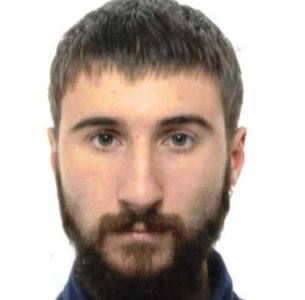
ROMAN IANNETTA (Belgium)
I was born and have always lived in Brussels, the city where I completed all my secondary studies. I then began a course in Art History at the Université Libre de Bruxelles (ULB), which I interrupted to pursue artistic studies that I am currently continuing at the ERG (École de Recherche Graphique), in the Photography department. Documentary is for me a constant source of questions, about myself and about the world. Being able to join you would certainly be an opportunity for new encounters and valuable exchanges.
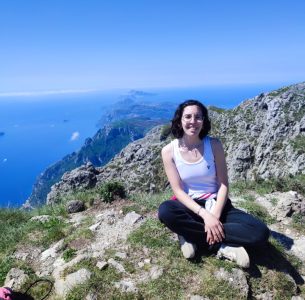
FORTUNATA DI PAOLA (Italy)
I am a 24-year-old girl who lives at the foot of Monte Faito. I have just completed my Master's degree in French Language Teaching, which gave me the opportunity to live in Bordeaux for a year. I am interested in languages, cultures and literatures from around the world. My greatest passion is reading, which has been my companion since childhood. I am a curious person, I love meeting people, asking questions and engaging with new individuals. The Faito Doc Festival seems like an opportunity not to be missed.
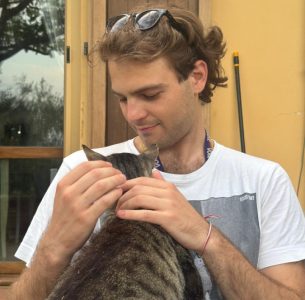
FEDERICO DURANTE (Italy)
Holding a degree in European Studies from the University of Maastricht, I work in political communication, media relations and European electoral campaigns. I have collaborated with Volt Europa and Comin & Partners, while nurturing a strong interest in cinema, writing and community dynamics as tools for dialogue and collective participation. Cinema has always represented for me a form of conversation made accessible, intimate and open to everyone's interpretations. In this sense, I find myself today at a moment of strong desire — and perhaps even need — for community, such as the one that the Faito Doc Festival seems to succeed in creating.
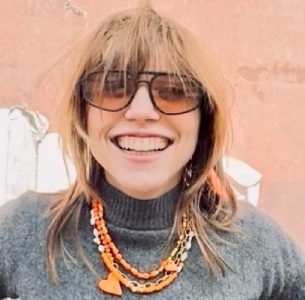
LYLO JACQUEMIN (Belgium)
Cinema has accompanied my journey since childhood, from when I discovered the transformative power of images and editing. Through my studies in art schools I have developed a critical eye and a sensibility deeply connected to documentary as a tool for questioning reality and turning it into poetry. The encounter with the Faito Doc Festival opens doors for me towards a cinema experienced as a collective and human experience. The themes of community and memory run through my work and my way of looking at the world. I join the Faito Doc Jury Jeunes with a curious gaze and a deep passion for documentary cinema.
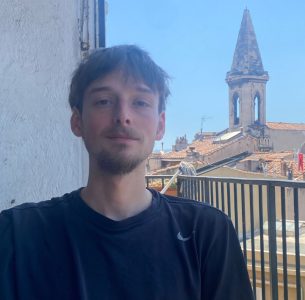
NOÉ PESTIAUX (Belgium)
A young photographer and football enthusiast, he lives and studies in Brussels at the ERG. Always drawn to languages, cultures and stories from around the world, he firmly believes that documentary is a political and social art form, capable of making the invisible visible. He dreams of making a film that explores the political and social side of football: the suburbs, migrations, class struggles and identities that come together around a ball. Curious, restless and deeply humanist, he pursues his research with his gaze always turned towards the football pitch and the world.
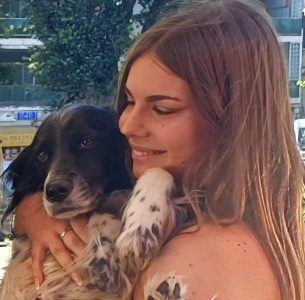
MAÏLYS FINOCCHIARO (Belgium / Italy)
I am a 19-year-old student, trained in theatre since 2013 through courses, workshops and internships, with the ambition of entering a Conservatory or a prestigious drama school. Raised in an artistic and international environment, I am developing my path between acting, stage presence and public speaking, alongside experiences in animation and event organisation. Open to experiences in the performing arts and other fields, I consider the Youth Jury experience a precious opportunity for exchange and discovery, one capable of enriching my human and artistic journey.
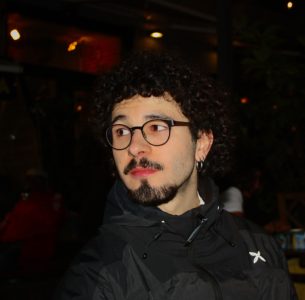
ALBERTO CUGINI (Italy)
A young sound designer who seeks to transform listening into a form of seeing. After studying at IED and now pursuing a Master's in Sound Design at the University of Tor Vergata, he has discovered in sound a sensitive space where silences and noises narrate reality. For him, cinema is not only watched: it is traversed with the ears, like an immersion into the world. Joining the Youth Jury of the Faito Doc Festival means encountering stories, people and sensibilities to be shared. Curious and deeply attentive to listening, he believes in a cinema of the real that is capable, above all, of feeling the world.
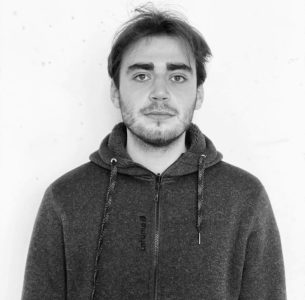
TADZIO BUFFARDIN (Belgium)
A young actor trained at the Conservatoire Royal de Bruxelles, he develops his path between contemporary theatre, collective work and scenic research. Through acting he explores the body, presence and relationships with others as tools for questioning reality. Attentive to forms of shared creation, he sees in the Faito Doc Festival a space for listening, transformation and encounter. Documentary cinema interests him for its ability to bring to the surface fragilities, memories and humanity that are often invisible. The Youth Jury is for him a way of traversing new perspectives and artistic communities.
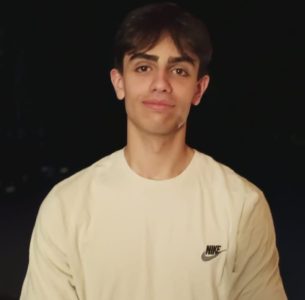
LEONARDO COCUZZA (Italia)
Seventeen years old, Leonardo is following his fourth year at the IIS Bodoni-Paravia of Turin, where cinema has become the centre of his outlook on the world. Drawn to both technical crafts and screenwriting, he has developed a strong sensitivity for images and audiovisual storytelling, also nurtured by his grandfather, a former RAI executive and film club organiser. His theatre training has sharpened his sense of body, mime and improvisation — elements he recognises in documentary cinema and its ability to tell stories about reality. Motivated and eager to learn, he sees the Youth Jury as an opportunity for growth and discovery.


